Posts

Showing posts with the label IPO

IPO's Strategy: IP for a creative and innovative UK Strategy 2024 to 2027

Image
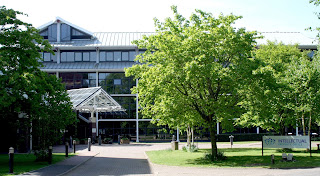
Intellectual Property Office, Newport Crown Copyright  Open Govr Licence v.3.0   Source IPO website Jane Lambert The Intellectual Property Office  is an executive agency of the Department of Science, Innovation and Technology .  Its mission is "to help people grow the UK economy by providing an IP system that encourages investment in creativity and innovation."  It set out its strategy for fulfilling that mission in its corporate report  IP for a creative and innovative UK Strategy 2024 to 2027   on 2 May 2024. Three Pillars In that report, the IPO stated that its contribution to growing the UK economy by providing an IP system that encourages investment in creativity and innovation will be built on the following three pillars: High-quality, efficient and accessible services A policy of supporting innovation and the economy Delivery by a high-performing organization with skilled people connected by a shared purpose. High-quality, Efficient and A...

DABUS in the Supreme Court

Image
Lord Kitchin* Jane Lambert Supreme Court (Lords Hodge, Kitchin, Hamblen, Leggatt and Richards) Thaler v Comptroller General of Patents, Designs and Trade Marks 2 March 2023 "DABUS" stands for "Device for Autonomous Bootstrapping of Unified Sentience". It was created by Dr Stephen L Thaler . who has trained it to invent  a food container  and  devices and enhanced devices and methods for attracting enhanced attention .  Dr Thaler has applied for patents for those inventions in several countries including the UK His applications have been rejected by the European, British and American and most of the world's other patent offices on the ground that an inventor must be a natural person.  The only country in which he has been successful is South Africa (see the South African Patent Journal July 2021 Vol 54 No 07 ). There is a list of Patents and Applications   for those inventions   on The Artificial Inventor Project website. In the United Kingdom, Dr T...

The Formstein Defence

Image
Author Rklawton   Licence   CC BY-SA 4.0   Source Wikimedia Commons   Jane Lambert Yesterday the Intellectual Property Office added a new para  125.17.8  on the Formstein defence  to its Manual of Patent Practice .  Considering that the defence is a doctrine of German law and that there has been no firm decision on whether that doctrine applies to this country, that is quite remarkable. Para 125.17.8 describes the doctrine as: "a principle developed under German patent law in relation to infringement and the doctrine of equivalents (DoE), whereby if an alleged infringer can show that an equivalent is a non-inventive variant of the claimed invention, then the patent’s scope for the purposes of determining any infringement is held to its normal construction – in other words the DoE does not apply." I have referred to the doctrine in  Patents - Technetix BV and others v Teleste Ltd . on 19 Feb 2010 and  Patents - Facebook Ireland Ltd v Vox...

Thaler v The Comptroller - The Patents Court decides whether Machines can be Inventors

Image
Jane Lambert   Patents Court (Mr Justice Marcus Smith) Thaler v The Comptroller-General of Patents, Designs and Trade Marks [2020] EWHC 2412 (Pat) (21 Sept 2020) DABUS was described by its owner, Dr Stephen Thaler, "as a type of 'Creativity Machine'".  I have mentioned it before in Artificial Intelligence - The DABUS Inventions   19 Feb 2020 and Artificial Intelligence and Intellectual Property   27 Dec 2019 NIPC News.  Dr Thaler claims that his machine has invented a Food Container  and Devices and methods for obtaining advanced attention .  Applications for patents for those inventions have been filed in the United Kingdom, the United States and the European Patent Office.  All three applications have been rejected on the grounds that an inventor must be a human being under the laws of the United Kingdom and the United States and the European Patent Convention. In Britain, Dr Thaler appealed to the Comptroller and his appeal was heard by Mr Huw...

UK Patent Applications

Image
Standard YouTube Licence Jane Lambert The World Intellectual Property Organization ("WIPO") , European Patent Office ("EPO")  and the Intellectual Property Office ("IPO")  have all published statistics on patenting activity in 2019.  According to the IPO's Facts and figures: Patent, trade mark, design and hearing data: 2019 , the IPO received 19,250 patent applications in 2019 which was down from 20,931 the previous year.  Just over 12,000 of those applications came from the UK compared to 12,843 the previous year.  However, there was a welcome 6.9% increase in the number of applications for European patents (6,156 in 2029 compared to 5,761 in 2018 (see European patent applications ).  There was also modest growth in the number of international patent applications from the UK (5,786 in 2019 compared to 5,634 the year before (see  Annex 1: International patent applications by origin (PCT System) )). The modest increase in the number of internatio...

Evidence in IPO Tribunal Proceedings

Image
Intellectual Property Office Author IPO Crown Copyright Licence:    Jane Lambert For many years the Chief Executive of the Intellectual Property Office ("IPO") who is also known as "the Comptroller" for patent and unregistered design right matters and "the Registrar" for trade marks and registered designs, has referred disputes that have been brought before him or her to officials known as "hearing officers".  Until 19 April 2000, those hearing officers conducted their proceedings very differently from the courts. There was nothing that resembled statements of case in civil litigation and evidence was filed in statutory declarations. As a result, many of those proceedings were slower and more expensive than they should have been. A great change occurred on 26 April 2000 when Tribunal Practice Notice (TPN 1/2000)  came into force. It addressed the following matters: "The Office and parties should endeavour to com...

Business to Business Collaboration Agreements

Image
Manchester Central Library Author Mike Peel Licence Creative Commons Attribution Share Alike 4.0 International Source Wikipedia Jane Lambert According to the Intellectual Property Office's Facts and Figures   for 2016 and 2017, 24 out of the 38 inter partes disputes that came before the Office's tribunals arose from disputes over ownership of inventions.   This can be an expensive and time consuming process as I explained in Disputes over Ownership of Inventions  6  Aug 2015 NIPC Southeast.  Disputes over ownership of other intellectual property  ("IP") rights result in infringement actions like MEI Fields Designs Ltd v Saffron Cards and Gifts Ltd and another [2018] EWHC 1332 (IPEC) (6 June 2018) which I discussed in Copyright: MEI Designs Ltd. and Saffron Cards and Gifts Ltd . 8 Aug 2018. Many of those disputes arise out of collaboration between different business entities where no or insufficient attention  was paid to...

Transposing the Trade Secrets Directive into English Law: Confidentiality Agreements

Image
Chartreuse Author Jarv Licence Free Art Licence  Source Wikimedia Commons Jane Lambert Patents subsist for 20 years, copyrights for the life of the author plus 70 years but the obligation neither to disclose nor make use of business or technical information that is disclosed in confidence can last indefinitely.  The recipe for Chartreuse is a case in point.  That distinctive liqueur has been emulated and occasionally counterfeited but never replicated. All members of the World Trade Organization are obliged to protect undisclosed information from unauthorized use and disclosure by art 39 of the Agreement on Trade-Related Aspects of Intellectual Property Rights ("TRIPS") but different countries including different EU member states discharge that obligation in different ways. Such differences affect the functioning of the internal market.  To minimize those differences the European Council adopted the trade secrets directive (Dir...

Building the Evidence Base on the Performance of the UK Patent System

Image
Intellectual Property Office Crown Copyright Reproduced courtesy of the IPO Jane Lambert Building the Evidence Base on the Performance of the UK Patent System   is a report written by the Economics, Research, and Evidence team of the Intellectual Property Office. It was published on 23 Aug 2017. The title of the report appears to refer to the first recommendation of Prof. Hargreaves's review of Intellectual property and growth (see Digital Opportunity   May 2011): "Evidence . Government should ensure that development of the IP System is driven as far as possible by objective evidence. Policy should balance measurable economic objectives against social goals and potential benefits for rights holders against impacts on consumers and other interests. These concerns will be of particular importance in assessing future claims to extend rights or in determining desirable limits to rights." It consists of 76 pages including covers and is divided into...

IP concerns everyone - not just elite lawyers and big business

Image
 On 18 Sept 2008 I wrote in IP Yorkshire : "Team GB may have done very well at the Beijing Olympics but our inventors and entrepreneurs are nothing like as successful in the European patent application stakes. As can be seen from the ..... table [in the article], we trail a poor 7th in the number of European patent applications. Not only do we lag behind the economic super-powers, the USA and Japan, but we compare badly even to France and Germany with similar populations and GDP. We even trail the Netherlands and Switzerland with a third and an eighth of our population respectively and are about to be overtaken by distant South Korea which was a battlefield 50 years ago."  I considered why the UK does so badly and found that it was because "start-ups and other small businesses, that are the mainspring of innovation in the UK as in most of our competitors, make much less use of the intellectual property system than their equivalents in other countries and, indeed, mu...

Unified Patent Court Consultation

Image
As I said in How the Intellectual Property Act 2014 changes British Patent Law   21 June 2014 JD Supra, the most important provision of the Intellectual Property Act 2014  is s.17  which inserts a new s.88A into the Patents Act 1977. That section confers power on the Secretary of State to make provision in the UK for the Agreement on a Unified Patent Court . Why is that agreement important? It is because art 1 establishes a court common to almost all the countries of the European Union including the UK for the settlement of disputes relating to European patents and European patents with unitary effect ("Unitary patents").  That court will be known as the Unified Patent Court ("UPC") and it will consist of a Court of First Instance and a Court of Appeal. The Court of Appeal will sit in Luxembourg but the Court of First Instance will have a central division with Paris with sections in London and Munich. In addition there will be regional and local divisi...